00
Duration
6 months
Skills
Design Research
Human Factors
Visual Design
Information Design
Illustration
Collaborator
Dr. Vivek Kant
Outcome
Published Illustrated Book
01
Project Overview
How can complex disaster research be transformed into an engaging narrative that helps people understand not only what happened, but why it happened?
The Problem
Most conversations around disasters focus on the event itself rather than the systems that shape its impact. Critical questions such as why some communities are affected more than others, how existing vulnerabilities amplify disasters, how cultural knowledge influences survival, and what lessons can strengthen future resilience are often overlooked.
The challenge was to transform dense academic research into an experience that was engaging, accessible, and emotionally grounded, enabling readers to understand not just what happened, but why it mattered.
Objectives
Instead of documenting facts alone, the project aimed to help readers
Understand disasters as systemic failures rather than isolated events.
Recognize the human, cultural, and environmental factors influencing resilience.
Build disaster memory through accessible storytelling.
02

Research Methodology
Primary Data
Newspaper archives collected by environmental researcher Dr. Pankaj Sekhsaria, who reported extensively during the tsunami.
Secondary Data
Design Research
Human Factors
Visual Design
Information Design
Illustration
03
Coding


Identifying the emerging themes
Defining Themes

04
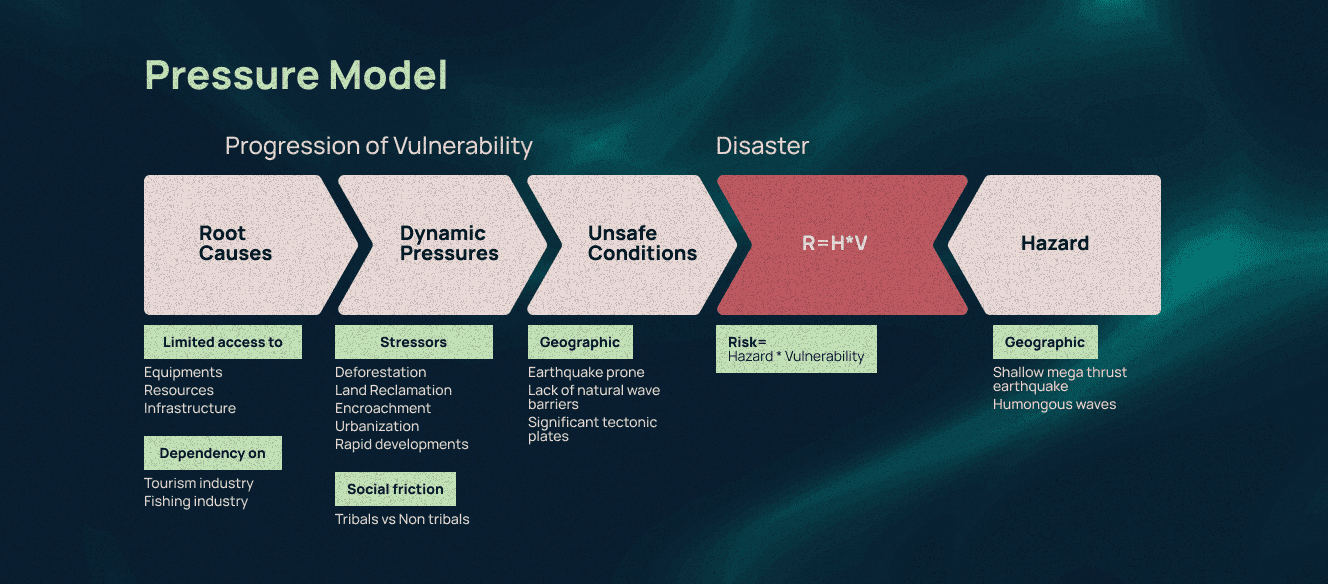
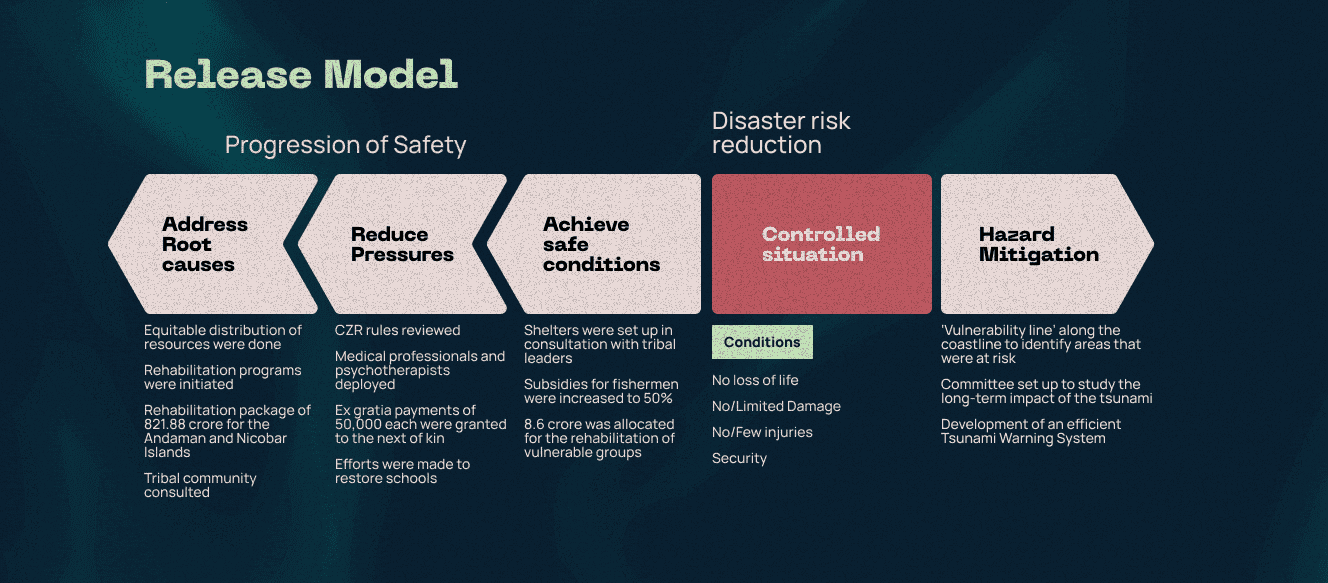
One of the key research outcomes involved mapping the findings onto the Pressure and Release (PAR) Model.
Instead of viewing the tsunami purely as a natural hazard, the framework demonstrated how root causes, dynamic pressures, and unsafe conditions collectively produced vulnerability.
This systems-thinking approach transformed qualitative observations into actionable insights for disaster resilience.
Pressure Model
The personas capture the varied ways people relate to Rakhandar folklore, reflecting differences in belief, experience, and cultural connection. They served as a tool for understanding user motivations and informing narrative and interaction design decisions.
05
Infographics
Quantitative information and scientific concepts were translated into visual infographics to simplify complex data. Comparisons, statistics, and scales that would otherwise require lengthy explanations were communicated through concise visuals, enabling readers to grasp key insights quickly without interrupting the narrative flow.


Narratives
Stories were used to humanize the research by placing readers in the perspective of communities affected by the tsunami. Drawing from archival accounts and thematic findings, these narrative chapters contextualized complex issues through lived experiences, fostering empathy while introducing broader social and cultural themes.
Narratives
Stories were used to humanize the research by placing readers in the perspective of communities affected by the tsunami. Drawing from archival accounts and thematic findings, these narrative chapters contextualized complex issues through lived experiences, fostering empathy while introducing broader social and cultural themes.

06
Illustration Language
A hand-drawn illustration style was developed to bridge factual research and human storytelling. Characters, landscapes, flora, and environmental systems were simplified into expressive forms that emphasized emotion over realism. This approach enabled the same visual language to support multiple forms of content.

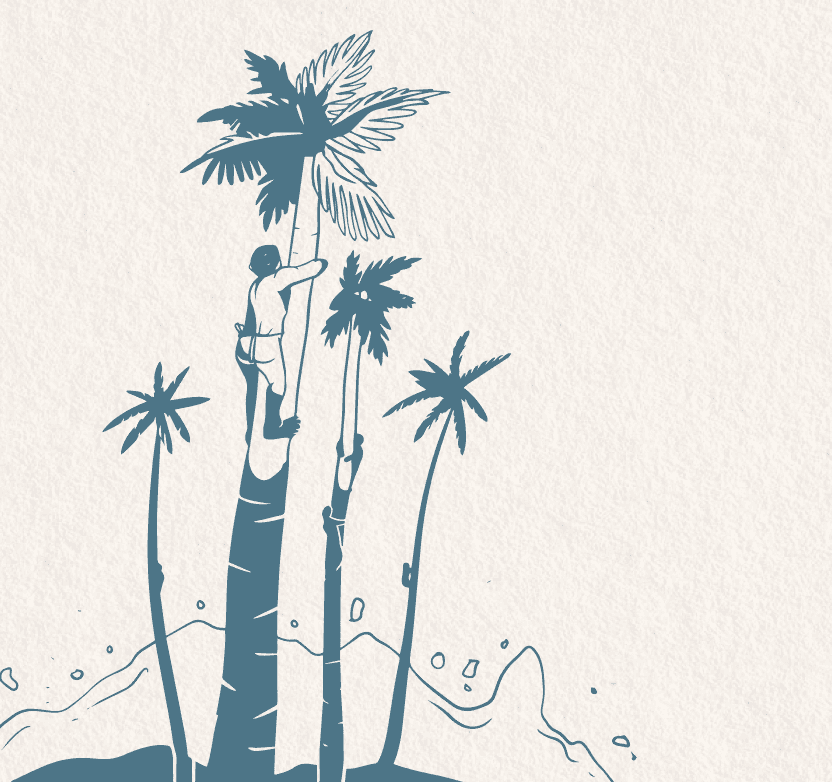
This illustration uses depth and scale as a narrative device to represent relative population sizes among the indigenous communities of the Andaman and Nicobar Islands.
Rather than relying on numerical charts, the composition arranges each group along a shallow depth axis, with larger populations placed closer to the viewer and smaller populations positioned progressively farther back.


Typography & Layout
This illustration uses depth and scale as a narrative device to represent relative population sizes among the indigenous communities of the Andaman and Nicobar Islands.
Rather than relying on numerical charts, the composition arranges each group along a shallow depth axis, with larger populations placed closer to the viewer and smaller populations positioned progressively farther back.

07
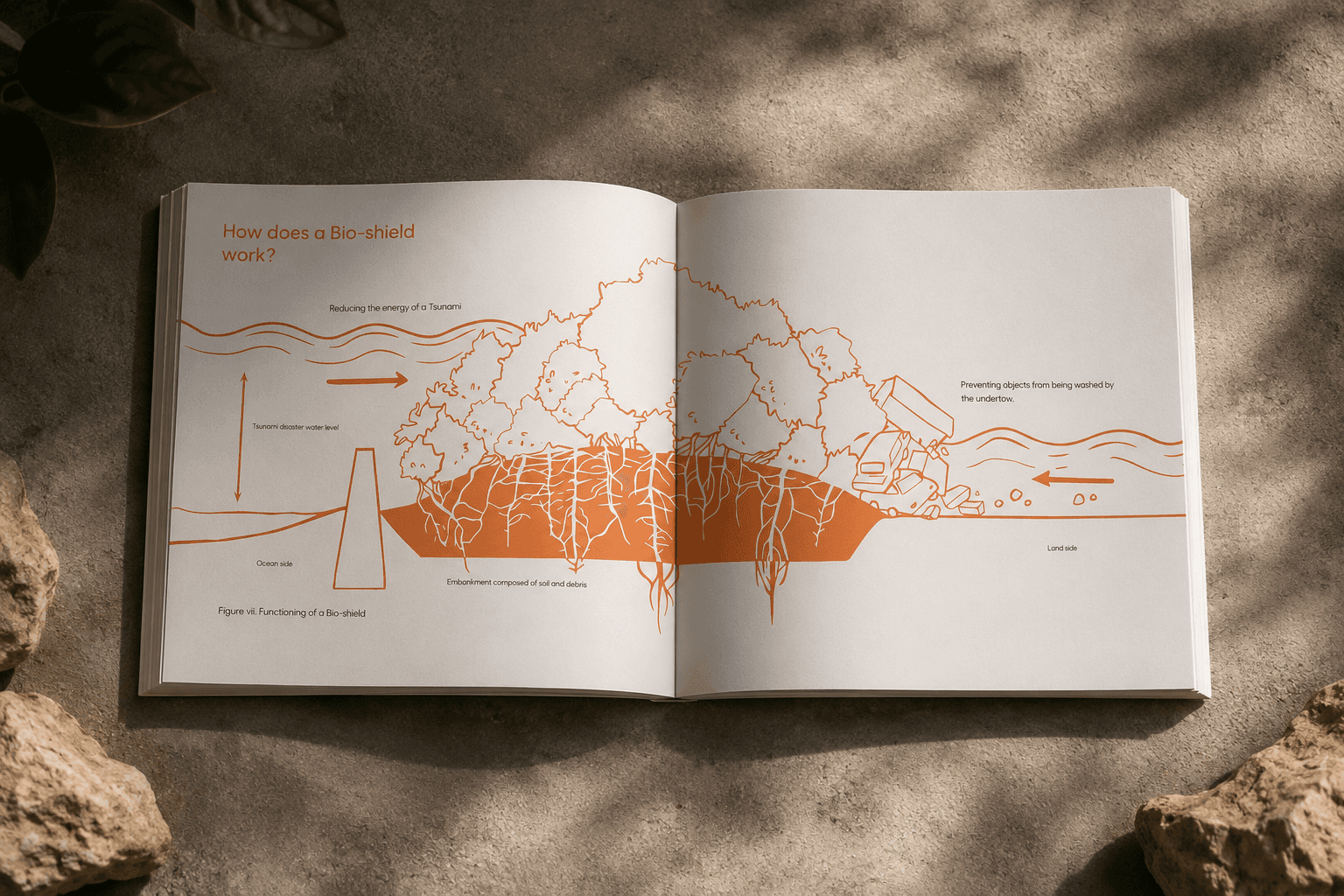
The project culminated in the publication of Comprehending the Indian Ocean Tsunami, 26 December 2004, an illustrated research publication that transforms complex disaster literature into an accessible, narrative-driven reading experience. By combining thematic analysis, information design, and visual storytelling, the book presents the tsunami not simply as a catastrophic event, but as a layered socio-ecological phenomenon shaped by culture, vulnerability, governance, and resilience.
Showcase


08
The project culminated in the publication of Comprehending the Indian Ocean Tsunami, 26 December 2004, co-authored with Dr. Vivek Kant and published by Astitva Prakashan. The 110-page illustrated publication brings together disaster research, thematic analysis, information design, and visual storytelling to make complex socio-ecological systems more accessible to students, educators, designers, and policymakers.
Following its release, the book was featured in an interview with The Literature Times, where we discussed our research methodology, the use of archival newspaper reports as primary data, and our design approach to communicating vulnerability, resilience, and disaster preparedness through narrative and visual communication.
09
While the book successfully translated complex disaster research into an accessible visual narrative, it also highlighted opportunities to expand the work beyond print. Future iterations could incorporate interactive and digital storytelling formats, enabling readers to explore themes through maps, timelines, and multimedia accounts that reveal the disaster from multiple perspectives.
The research methodology also presents a scalable framework for communicating other complex socio-environmental challenges. Applying the same thematic analysis and information design approach to topics such as climate change, biodiversity loss, indigenous knowledge systems, and disaster preparedness could make critical research more engaging and accessible to wider audiences.


